Synastry personal planets
Sun–Moon Synastry: What Emotional Recognition Can Actually Tell You
Sun–Moon contacts are often read as emotionally significant because they bring two foundational chart symbols into conversation: identity and direction on one side, instinct and comfort on the other. That can feel deeply familiar. It is not, on its own, proof that a relationship is safe, lasting, or meant to be.
01
What the Sun and Moon are trying to describe
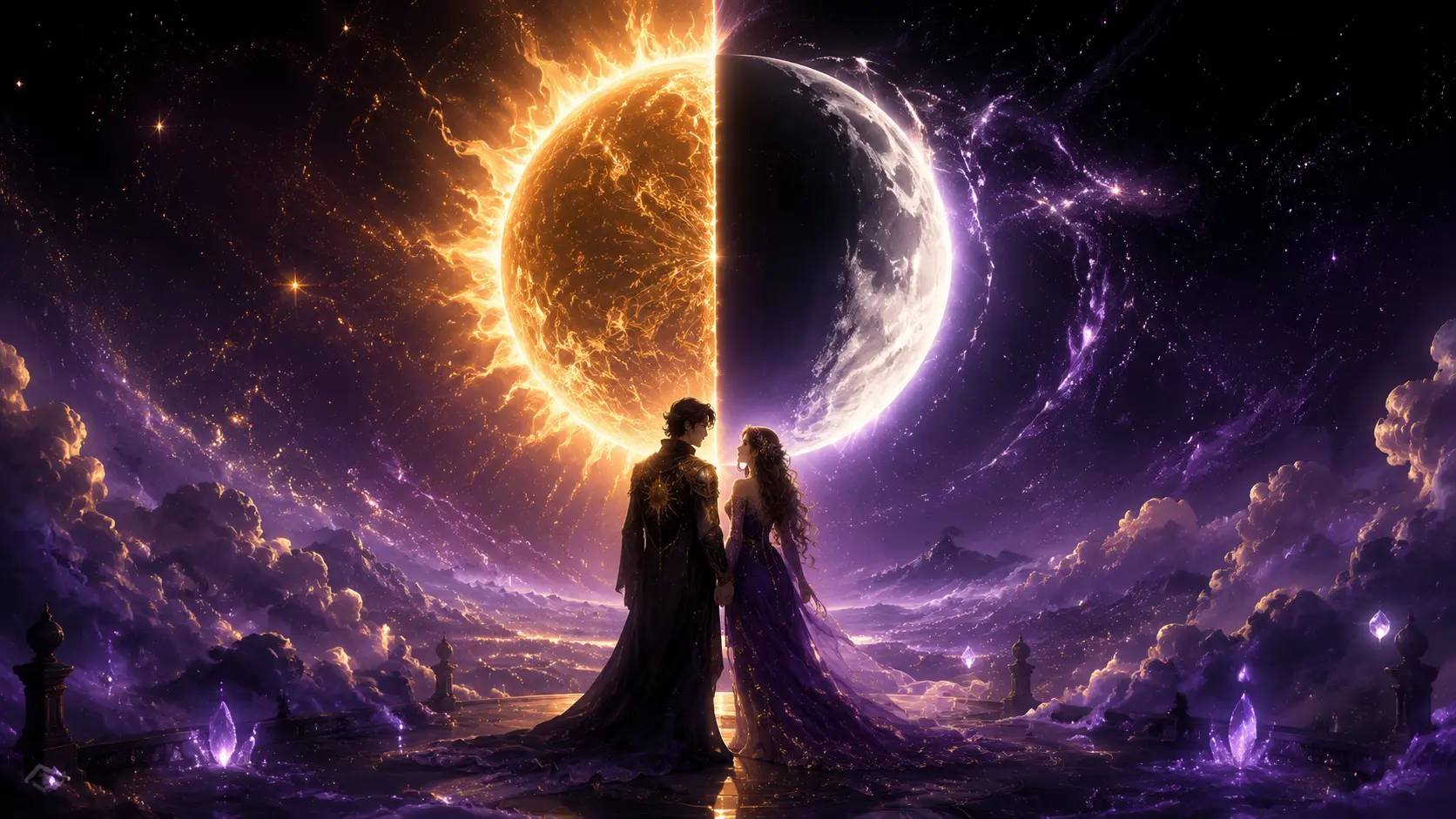
In astrology, the Sun is commonly used to speak about vitality, identity, and the way someone moves toward a sense of purpose. The Moon is commonly used for emotional reflexes, comfort, memory, and the conditions that help a person settle. When one person’s Sun connects with another person’s Moon, readers often look for a conversation between being seen and feeling at home.
This is symbolic language, not a psychological assessment. Its value is in the questions it generates: Does one person feel encouraged to be more themselves? Does the other feel emotionally considered? Do they create a rhythm that is warm in ordinary life, or only intense when the relationship is new?
02
Recognition can be beautiful and still incomplete
A strong Sun–Moon link can produce the feeling that another person understands something essential quickly. That feeling deserves attention, but not automatic trust. Familiarity can come from genuine care, from shared temperament, from a repeated relational pattern, or from a mixture of all three. The chart cannot sort that out without lived context.
Ask what the recognition makes possible. Does it make honesty easier? Does it make you more able to name needs, respect a no, and repair after a misunderstanding? Or does it create pressure to keep the connection special at any cost? Emotional resonance is valuable when it leaves both people more free, not less.
Keep exploring: How to Read a Synastry Chart: A Complete Beginner’s Guide · Moon Sign Compatibility: A Practical Guide to Emotional Fit
03
Conjunctions and oppositions are not a scorecard
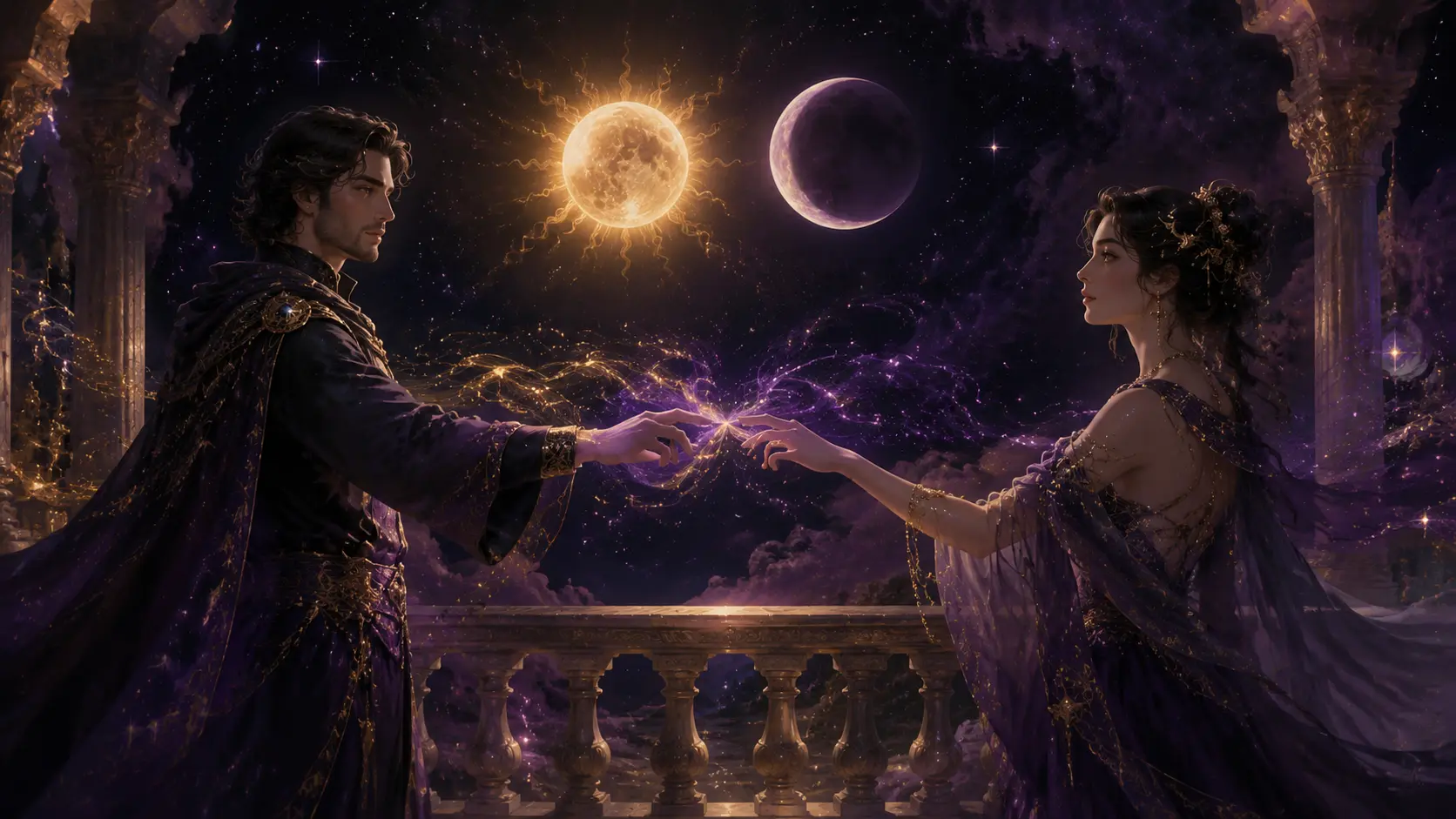
A conjunction is often described as immediate recognition because the two placements occupy the same area of the zodiac. An opposition can feel magnetic because each person meets a contrasting but connected point. Neither aspect is automatically easy. A conjunction can blur the difference between being supportive and being fused; an opposition can create complementarity or turn every difference into a tug-of-war.
The useful question is whether each person has room to be distinct. Can the Sun person pursue their own direction without the Moon person feeling abandoned? Can the Moon person ask for comfort without the Sun person feeling their identity is being managed? The aspect provides an image; the relationship provides the answer.
04
Harmonious aspects need real maintenance too
Trines and sextiles are frequently framed as supportive flows. They may make emotional understanding feel less effortful, especially at the beginning. But ease can also hide assumptions. Two people can think they understand each other so well that they stop asking direct questions, then feel surprised when a stress response does not match the picture they carried.
Use apparent ease as an invitation to stay curious, not as permission to skip the basics. Say what kind of comfort you want. Ask how a partner prefers to receive appreciation. Notice whether the relationship works when schedules change, resources are tight, or a difficult boundary needs to be held.
05
Challenging aspects are not a sentence
Squares and other tense contacts are often described as friction between a person’s way of being and another person’s emotional reflexes. That can show up as misread intentions, mismatched pacing, or a recurring sense that one person is asking for a kind of response the other has not learned to offer. It can also become a site of growth when both people are accountable.
Do not turn a tense aspect into a reason to tolerate repeated injury. Growth is not the same as strain. A relationship is not improved by calling disrespect, fear, or instability “karmic.” If the same hurt happens again, the relevant question is whether behavior changes after the conversation, not whether the aspect is dramatic enough to explain it.
06
Sign contacts and exact aspects answer different questions
Sun and Moon signs can offer a broad sense of the elemental or modal styles involved. Exact aspects add a more specific geometry between two charts. Neither one should be flattened into a ranking. A same-element pair might share a familiar tone but avoid a necessary conflict; a contrasting pair might learn a remarkably strong repair practice.
If you compare charts, keep the data clean. Confirm dates and locations, and be careful with an unknown birth time because the Moon can change signs within a date. If an input is uncertain, say so. There is no need to manufacture precision in order to make the story sound meaningful.
07
Bring it back to everyday emotional care
A Sun–Moon reading becomes real when it leads to a small, observable conversation. Ask: When do you feel most seen by me? What helps you feel settled after a hard day? When I am focused on my own goals, what reassurance helps you stay connected? These questions translate a celestial symbol into choices a couple can make on a Tuesday night.
Pay attention to the response, not only the romance of the question. A partner who can describe a need, listen to yours, and revise a habit has given you far more useful information than a perfect aspect pattern. The chart can help frame the question; the care is in the follow-through.
08
Use the contact as a conversation, not a verdict
If this connection feels tender, enjoy that tenderness without making it carry the future alone. If it feels difficult, name the pattern without deciding the relationship is impossible. The best synastry reading leaves you more able to see two full people, including the ways their needs overlap and the ways they do not.
One useful close-out is a shared check-in: “What part of this relationship helps you feel more yourself, and what part makes it harder to stay connected to yourself?” The answers may be gentle, awkward, or clarifying. All are better information than a prediction about who is destined to understand whom.
Common questions
Is Sun–Moon synastry one of the best compatibility indicators?
It can be a meaningful point of reflection, but no single contact can determine relationship quality. Look at patterns of care, communication, consent, and repair.
Do Sun–Moon oppositions mean soulmates?
No aspect proves a soulmate story. An opposition may describe attraction to difference, but people still need shared values, boundaries, and compatible choices.
Does an unknown birth time affect Sun–Moon synastry?
The Sun is stable by date, but the Moon can be time-sensitive. With an unknown time, use the Moon’s full civil-day longitude window: keep a contact only when it survives that range, label boundary cases as Conditional, and omit contacts that cannot be supported.
Velvet Zodiac takeaway